
Category

Finance

Category

In the Singaporean context—a market characterized by high digital literacy, intense competition, and a cultural pivot toward “authenticity”—storytelling acts as the bridge between a commodity and a category leader. Whether for a multi-national corporation or a C-suite executive’s personal brand, storytelling drives impact across three specific dimensions; from economic as a product of trust, to breaking “cold corporate walls”, and enhanced localized resonance.

  1. From Features to Meaning: Narrative-Led Growth with Measurable Impact

In saturated markets, features blur together. Stories don’t. Narrative-led marketing reframes value, shifting conversations away from discounts and toward identity, craft, and purpose. For example, in fashion, this might mean moving beyond fabric specs to the origin conflict—why the brand exists in a climate like Southeast Asia. In hospitality, it’s not room size, but the feeling of arrival and belonging.

Partnering with creative storytelling agency singapore experts helps your audience understand why you exist without the need to compare endlessly. That helps transition consumer perception from a commodity view (where people compare prices/features) to a transaction of identity (where people buy because they believe in your “Why”). This results in:

  • Faster conversion cycles
  • Higher willingness to pay premiums
  • Longer content lifespan through evergreen narrative pillars

In Singapore’s performance-driven economy, stories don’t replace metrics—they improve them.

  1. Visual Storytelling in Motion: Short-Form Video as Trust Infrastructure

Short-form video dominates attention, but not all views carry value. What separates noise from influence is intentional visual storytelling.

Professionally crafted video—using real actors, journalists, and voice artists—signals institutional quality. In travel and hospitality, this means showing unseen moments: staff rituals, guest journeys, or the choreography behind service excellence. In personal branding, it humanizes leaders, replacing polish with presence.

Expert strategy focuses on:

  • Thematic campaigns instead of random posts
  • Visual consistency that reinforces a single belief
  • Editorial pacing that mirrors how audiences actually scroll

In Singapore, where audiences are sophisticated and impatient, production quality is not vanity—it’s credibility.

  1. Cultural Intelligence at Scale: Localizing Stories for Asia-Pacific

Global brands fail in Asia not because their products are weak, but because their stories arrive untranslated—culturally, not linguistically. Professional storytelling localizes truth, not slogans. In Singapore’s multicultural ecosystem, this means understanding nuance: humor without alienation, aspiration without arrogance, relatability without dilution.

Effective narrative architecture allows one core story to flex across markets—Singapore today, Jakarta or Bangkok tomorrow—without fragmenting identity. This modular approach protects brand coherence while respecting local context, from national moments to digital behavior patterns.

The result is a “trust reservoir”: credibility built quietly over time that cushions brands during missteps, market shifts, or expansion phases.

  1. Measuring and Implementing What Actually Matters: Emotional Resonance to Commercial Return

Instead of overselling your many years of experience which are bound by time, experts help document and broadcast such moments as a storied journey. Those impactful moments, one moment at a time. 

Tell the story of that moment:

  • When a failed strategy was reversed under pressure
  • When a client avoided loss—or unlocked unexpected value—because of your judgment
  • When your approach delivered results others said weren’t possible

That’s the power of professional storytelling. It doesn’t describe experience—it demonstrates value, turning credibility into something felt, remembered, and trusted. Expert storytellers measure the full arc—from sentiment to sales.

Professional frameworks assess:

  • Emotional resonance through engagement depth and recall
  • Cognitive ease via clarity and message retention
  • Economic outcomes such as premium acceptance and lead quality

A narrative audit treats your brand like a newsroom, asking one hard question: Would this story deserve attention if it weren’t paid for? When the answer is yes, storytelling stops being a creative cost and becomes commercial leverage.

In essence, the ultimate impact of storytelling in Singapore is strategic consistency. With a professional framework behind the art, storytelling helps you “steer the ship.” It ensures that what you say (your story) matches what you do (your service), creating a seamless loop of Reputation Assurance. In a corporate environment, people don’t follow companies; they follow leaders who have a clear “North Star.”


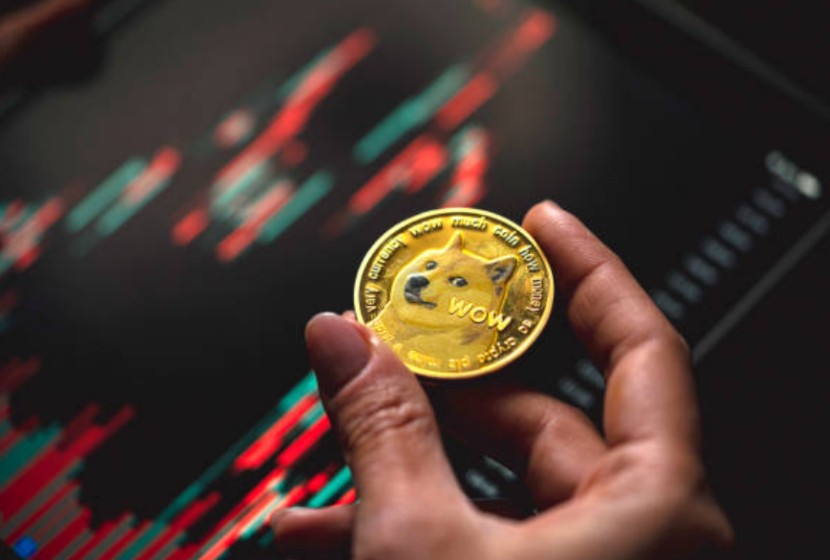
Throw out the stuff on boring investments that the suits on Wall Street say. We’re riding into the wild, meme-fueled, and surprisingly enduring world of Dogecoin. You’re not just thinking about buying into another cryptocurrency, you’re considering being part of a wing that began as a silly joke and evolved into an international sensation. Learning how to buy doge represents your first step into this new, beyond-anything playground. Much less in complex charts but much more in a community-issued asset that somehow against all odds has captured the imagination of millions, it’s to be understood. This isn’t a transaction, it’s you getting the front row seat to one of internet’s most fascinating threads only money stories.

So, you’re ready to get your hands on some DOGE. The very first thing you need is a reliable platform, a digital doorway into the world of crypto. While there are dozens of exchanges out there, for this very reason you want the whole process of learning how to buy Doge to be easy and safe. This requires a little bit of research. A good interface, high security level, and Dogecoin support are among things to look for. The point is to find one’s place for signing up for or getting ownership having not felt too much like deciphering ancient code. A smooth start makes the entire experience much more enjoyable.

The second action after choosing your exchange in the search to how to buy Doge is to fund your account. Most of these platforms provide multiple options for their clients, from connecting their bank accounts directly or through a debit or credit card. Apparently, each approach has varying speeds and fee structures attached, always, therefore take time and look at what might work best for your timeline and budget as your first Dogecoin purchase depends on it. This will be the link between traditional money and your newly acquired digital assets. When your account has some funds in it, that is when you make the actual purchase. You will have to go to the trading section and look for the DOGE trading pair, e.g., DOGE/USD or DOGE/USDT, enter the desired amount, then click buy- That is how you have now officially mastered the core mechanics of how to buy Doge. These coins will be in your exchange wallet, that is proof that you are actually in the Dogecoin universe.

Step into a Fresh Crypto World

So now you are the proud owner of some DOGE, it’s where the real fun starts. This isn’t one of those ‘set it and forget it’ kind of deals. It’s a carefully managed investment to make you fully understand where actually, your coins reside in the process. Leaving your Dogecoin on an exchange is the easy way to go about this especially when there is continuous flow or for long-term holding, moving it into a personal wallet would be the better safety move. Think of an exchange like a busy bank vault and your personal wallet is your own quiet secure home at home. Getting to know various wallet options, right from basic software wallets on your phone to relatively safer hardware wallets is one other crucial step in managing your assets after you have learned how to buy Doge.

Management phase goes beyond storage. It is about tracking your investment. It doesn’t have to be every tiny shift in price that you are worried about, being generally market-savvy is prudent. What’s the Dogecoin community saying? What major news events are affecting the crypto world? All this involvement helps you make a considered decision, rather than a panicky one based on hype or fear. Knowing how to buy into Doge was step one, now it’s time to learn to live with your Dogecoin investment. It is about gaining a cool strategic psyche in a market known for its turbulence.

Finding Your Way to Possible Profits

Let’s look to the future. You didn’t just learn how to buy Doge so happily with the thrill of clicking a button, you realize that investment always has potential. Planning for this breed’s ownership is going to require a good deal of patience, strategy, and a hefty dose of reality. The first rule is never to invest what you cannot afford to lose. Investing can be exciting, however, it can’t be a surefire road to riches’ kind. Once this rule has been firmly implanted, it’s time for profit-taking strategies to be considered. Perhaps you set some specific price targets at which you will sell some of your holdings to get your initial investment back in the game. That way, you’re playing with ‘house money,’ which is a fantastic psychological position to be in.

Lastly, it would not do the plan justice if there wasn’t any consideration for the long game. This is so because Dogecoin has proven to be a decentralized system that isn’t just easy to wipe out. Some traders would keep “HODL” some of their stash into the distant future, believing in its long-run potential either as a transactional currency or as a cultural icon. Too profitable to simply be the process of how to buy Doge but rather the belief in the long-term voyage and ability to survive through market cycles. In this case, you could be strategic in taking profit in the short term and holding onto it in the long term, finding a strategy that suits your personal financial goals and your tolerance for risk.

Learning how to buy Doge is more than a set of instructions. It’s an entry into a fun dynamic community, right? Oh, and the best platform selection: secure handling of your holdings and a well-thought-out future make this simple purchase a strategic corner of your financial landscape. I mean, who knows what will come of Dogecoin? However, you will reign over it confidently if you stay informed and wise. So, seriously, get your DOGE, be smart about managing it and see what happens on this crazy ride.

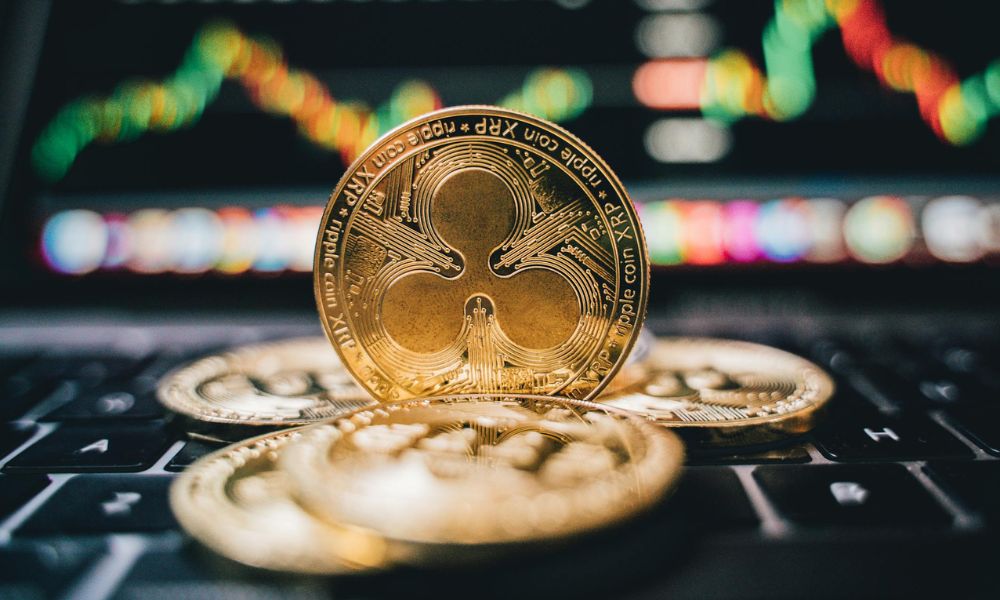
Honestly, talking about crypto can be exhausting. Every day there’s a new headline, a new price spike, or a sudden dip. And in the middle of all this chaos, Ripple’s XRP somehow manages to stay relevant. Right now, the XRP price USD sits around $2.44. Not crazy high, not rock bottom but somewhere that makes you think what’s next for this coin?

Here’s the thing about XRP it’s not just another coin. It’s designed to do something real: move money quickly across borders. Unlike Bitcoin, which can be slow and expensive for transfers, XRP settles payments almost instantly. Banks are trying it out, small financial firms are experimenting with it, and people are starting to notice that this coin actually has a purpose.

Why XRP Price Matters

You might think $2.44 is just a number. But with XRP, it’s more than that. It’s a reflection of confidence, adoption, and yes, a little bit of speculation too.

A few things influence the price right now:

  • Big Players Getting Involved: When banks or large payment companies start using XRP, it tells the market “This isn’t a toy.” That kind of trust usually nudges the price in a positive direction.
  • Regulatory News: XRP has had its share of legal drama. Any updates from regulators can swing the market. Lately, people are hopeful that XRP might get more recognition in broader digital asset frameworks. If that happens, confidence goes up and so does the price.
  • Market Moves: Let’s be honest crypto is wild. Whales (people with tons of XRP) can move the market just by buying or selling. Lately, XRP has been sticking between $2.40 and $2.50, which feels like a calm before the storm.

What the Price Could Do Next

Looking at trends, $2.50 is the big barrier. If XRP pushes past that, it could start climbing toward $3.00. Fail to break it, and it might dip back to $2.30. Beyond the charts, though, the story isn’t just technical it’s about adoption. Every time a bank uses XRP for payments, it proves the coin has real-world value, which matters more than short-term price swings.

The Human Side of XRP

Here’s the part I like XRP isn’t just numbers on a screen. It’s people. Developers improving the network, traders reacting to news, banks experimenting with payments these are all human decisions that shape the market.

When you look at the XRP price USD, you’re seeing the result of countless human choices. And that’s what makes it interesting. It’s not just speculation it’s technology, trust, and experimentation all rolled into one.

Why You Should Care

XRP isn’t just for traders hoping to double their money overnight. Its value comes from real-world use. Banks and companies using it for payments give it legitimacy. And that’s something most cryptocurrencies can’t claim.

If you’re thinking about investing, pay attention to:

  1. Regulatory updates.
  2. Institutional adoption.
  3. Market sentiment.

Focusing on these will give you a much clearer picture than chasing hype or panic-selling.

The Bigger Picture

At $2.44, XRP may feel like it’s just “holding steady.” But in reality, it’s carving out a place in the world of finance. Fast, cheap transactions matter. Real adoption matters. And XRP is quietly proving it can do both.

This isn’t just about short-term gains. It’s about building something that works. The XRP price USD is just one reflection of that larger story.

Bottom Line

So, what’s the takeaway? XRP is more than a coin. It’s a technology being tested in the real world, influenced by people, businesses, and governments. The current price is important, sure, but it’s the story behind it that really matters.

If you follow crypto, keep an eye on XRP not just for its price, but for what it represents: a glimpse at how money could move faster, cheaper, and smarter in the future.

When it comes to growing wealth, compounding is one of the most powerful forces in the financial world. When combined with strategic investments, particularly in small-cap stocks, compounding can lead to substantial wealth creation over time. However, small-cap stocks come with their own set of risks and rewards, making expert guidance essential. That’s where a financial advisory plays a crucial role, and a SEBI registered investment advisory ensures that your investment decisions are aligned with regulatory standards. In this blog, we’ll explore how compounding works in small-cap stocks and why it can be a game-changer for long-term wealth building.

What Are Small-Cap Stocks?

Small-cap stocks refer to shares of companies with a relatively small market capitalization, typically under ₹5,000 crore. These stocks are often considered high-risk but also high-reward, as they have the potential for significant growth over time. Small-cap companies tend to be in their early stages of development and may be more volatile than large-cap stocks, but they also present opportunities for substantial capital appreciation.

How Does Compounding Work in Small-Cap Stocks?

Compounding refers to the process where the returns you earn on your investment (such as dividends, capital gains, or interest) are reinvested to generate additional returns. The longer you stay invested, the more your returns start to compound. In the case of small-cap stocks, the potential for compounding is heightened due to the nature of their growth.

Let’s consider a scenario: Suppose you invest ₹1,00,000 in a small-cap stock, and it grows at an annual rate of 15%. After the first year, your investment would grow to ₹1,15,000. The next year, the 15% return will be applied not just to the initial ₹1,00,000 but to the ₹1,15,000. This process of earning returns on both the initial principal and the accumulated returns is the essence of compounding.

Over time, as the small-cap company continues to grow, your investment compounds at an accelerated rate, often leading to exponential growth. This is especially true if you reinvest dividends or capital gains into the stock, amplifying the compounding effect.

Why Small-Cap Stocks and Compounding Work Well Together

  1. High Growth Potential: Small-cap stocks often have high growth potential compared to large-cap stocks, which means there’s a higher chance of substantial returns. This high growth rate accelerates the effects of compounding, making small-cap stocks ideal for long-term wealth creation. Over the years, the returns compound, leading to significant appreciation in your investment.
  2. Reinvestment Opportunities: Small-cap stocks often reinvest their earnings into the business, further fueling growth. If you invest in small-cap companies that are consistently reinvesting profits for expansion or new projects, this reinvestment creates a positive feedback loop for your investment, enhancing the compounding effect.
  3. The Power of Patience: The true magic of compounding lies in time. Small-cap stocks can take years to fully realize their potential, but with the help of compounding, even small investments can lead to massive returns if given enough time. The earlier you start investing in these stocks, the greater your chance to benefit from compounding.

The Role of Financial Advisors in Small-Cap Investments

Investing in small-cap stocks requires careful analysis, as these stocks can be volatile. A financial advisory can help you select the right small-cap stocks based on your risk tolerance and financial goals. They can also guide you in monitoring your investments, ensuring that you stay on track to benefit from compounding.

Moreover, a SEBI registered investment advisory will provide compliant, transparent, and well-researched advice. These advisors will help you build a diversified portfolio that balances the high-risk nature of small-cap stocks with other safer assets, reducing overall volatility while maximizing potential returns from compounding.

Risks to Consider

While small-cap stocks offer high potential, they also come with increased risk. Market volatility, management issues, and changes in industry trends can impact small-cap stock prices significantly. As such, it’s essential to work with a financial advisory to manage your risk, build a diversified portfolio, and ensure you’re investing in high-quality small-cap companies with solid growth prospects.

Conclusion

Compounding is one of the most effective ways to build wealth, and when paired with strategic investments in small-cap stocks, it can lead to exceptional long-term growth. Small-cap stocks, with their high growth potential, create the ideal environment for compounding to work its magic. However, investing in small-cap stocks requires careful planning, patience, and expert advice. Working with a SEBI registered investment advisory can help you navigate the complexities of small-cap investing, ensuring that your investments align with your goals and risk tolerance. By starting early and staying committed, you can leverage the power of compounding to maximize your returns from small-cap stocks and achieve long-term wealth.